
Dimmable floor lamps: matching the light to the space
Define the job of the lamp before choosing its output, position and controls.
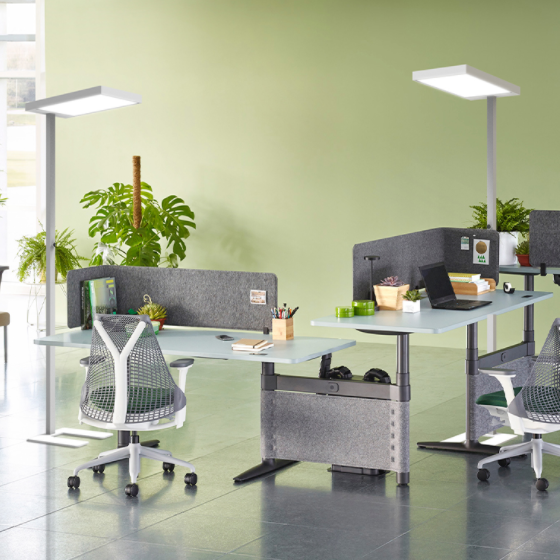
A floor lamp may add light at a desk, support a reading place or contribute to a room’s general lighting. Those roles need different reviews. A high-output description alone does not establish suitability; the useful question is where the light goes and how it can be adjusted in that space.
1. Office desks and home workspaces
Start with the desks, screens and normal seated positions. Place the sample where its base and cable can remain during everyday work. Check clearances as chairs move and, where relevant, as a desk changes height. Include the neighbouring workstation in the trial.
Review the light with the existing room lighting and daylight. Ask for distribution data or a lighting calculation when the project requires it. Dimming can be included in the brief, but it should not be used to avoid checking whether the lamp’s distribution suits the task in the first place.
2. Libraries and reading areas
Use the actual table or chair arrangement. Put books and documents in their normal positions and check the view from more than one seat. Decide whether individual users should adjust the lamp or whether a shared setting needs to be managed by staff.
Include the base, cable and controls in the layout review. A lamp placed for one reader may sit in another person’s route or sightline. Record positions that work for the whole arrangement before planning the quantity.
3. Lounges and hospitality spaces
In a lounge or guest-room brief, identify whether the lamp is intended for reading, background light or both. Review it alongside the other fittings at the settings people will actually use. Check that the switch is understandable and reachable from the relevant seat.
Ask how cleaning, repositioning and routine service will be handled. Confirm the required finish, supplied accessories and product documents for the intended location. A photograph of a similar interior is a useful starting point, but the proposed model still needs its own assessment.
4. Showrooms and specialist displays
For a showroom, place representative objects in the trial and check reflections, shadows and appearance from the customer’s viewing positions. Record the light specification and setting used for approval, especially when several fittings need to work together.
Artworks and sensitive collections need a specialist lighting brief. Do not infer suitability from dimming alone. Ask the responsible designer or collection specialist to define the limits and evidence required before selecting a lamp for that use.
5. Test the intended range of use
Try both the highest setting required for the task and lower settings used at other times. Check the controls, restart behaviour and any separate control of lighting channels. Confirm these functions for the selected configuration rather than assuming them from another variant.
Where energy performance or service life is part of the comparison, request the relevant product data and its stated conditions. Record the planned usage rather than carrying over a generic saving percentage or lifetime from an unrelated lamp.
A useful enquiry checklist
Prepare these details before discussing the proposed configuration:
- Primary task and the role of existing room lighting
- Furniture layout, circulation and cable route
- Required light distribution and project evidence
- Who adjusts the lamp and where controls must be reachable
- Intended dimming settings and restart behaviour
- Any specialist display requirements and sample acceptance record
Approve a position as well as a product
The final choice should include the lamp configuration, its intended location and the settings reviewed with users. This gives the installation team a usable reference and helps keep the lighting decision connected to the space.